Project in progress
An urgent challenge: diffuse intrinsic pontine glioma
How can we treat one of the most aggressive brain cancers in children without damaging healthy brain tissue?
Diffuse intrinsic pontine glioma (DIPG) is a highly aggressive brain tumour that mainly affects children between 5 and 10 years old. It develops in the brainstem, an area vital for breathing and movement. Symptoms appear quickly: vision problems, difficulty speaking or swallowing, balance problems, headaches and vomiting.
The prognosis is dire: average survival is about 9 months, and fewer than 10% of children live beyond two years. Radiotherapy is currently the only standard treatment, offering temporary relief.
Innovative approaches, such as CAR T cells
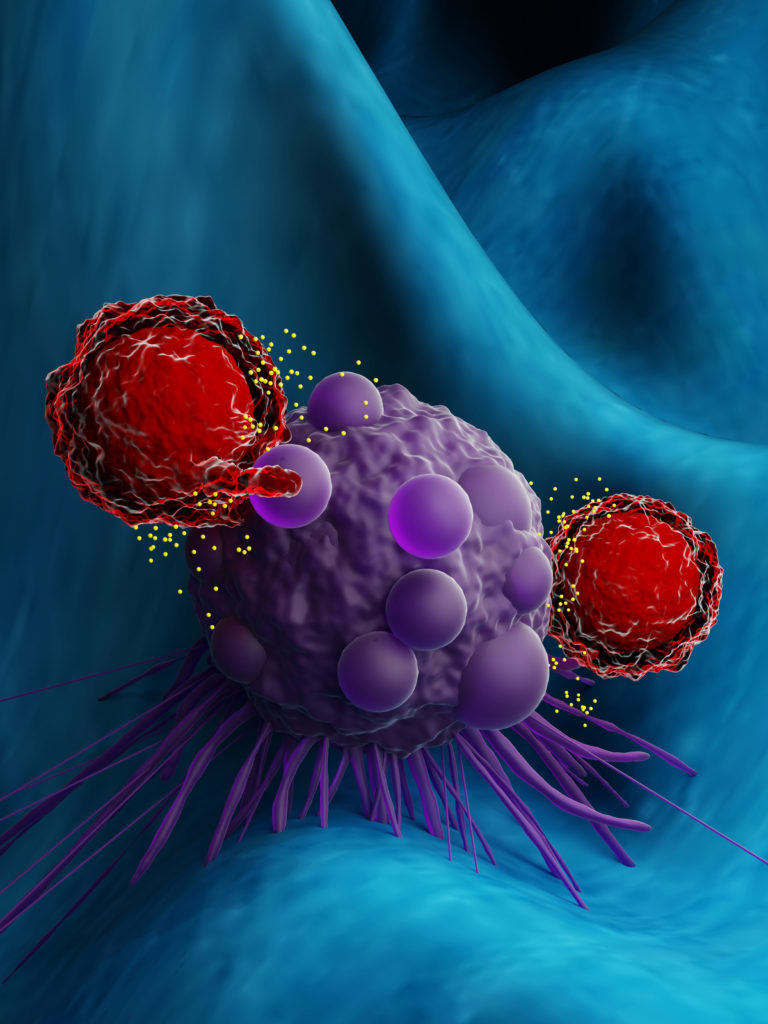
(immune cells modified to attack the tumour), are being tested. They target a molecule called GD2, found on tumour cells. But GD2 is also present in some healthy cells of the brain and nerves.
As a result, these treatments can cause severe inflammation and neurotoxic effects, because they also attack vital tissue.
To reduce these risks, a new target, OAcGD2, raises great hope: it is present in tumours but practically absent from the healthy brain. This would make it possible to attack the tumour without damaging essential tissue.
Prof. Denis Migliorini’s team is developing a new generation of CAR-T cells targeting OAcGD2, with the aim of offering children with diffuse intrinsic pontine glioma (DIPG) a therapy that is both safer and more effective.
The project has two major objectives.
The first is to design and evaluate CAR-T cells able to specifically recognise tumour cells without damaging healthy tissue. The researchers will analyse their effectiveness against DIPG cells, their ability to remain active over time and their safety, both in experimental models and in human tissue.
The second objective is to increase the effectiveness of the treatment and limit the risk of relapse. As tumours can evolve to escape therapies, the team aims to develop CAR-T cells able to activate other immune cells directly within the tumour. This approach would broaden the attack on cancer cells while limiting side effects through targeted, localised action.
Ultimately, this project could pave the way for a new generation of more precise and better tolerated immunotherapies for children with aggressive brain cancers.
This project is made possible by the support of the BRYN TURNER-SAMUELS Foundation.